How Is Surrogate Compensation Structured?
For many women considering surrogacy, compensation is one of the most important practical aspects of the journey. Most people know that surrogates are compensated for their time, commitment, and effort, but the financial details involve multiple components and specific terminology.
Surrogate compensation is typically paid in installments. It is structured to provide financial support across the different stages of the journey, from early preparation through pregnancy and recovery after delivery. This approach aligns compensation with the time, responsibilities, and expenses involved at each phase.
This comprehensive guide from Circle Surrogacy explains how surrogacy agencies commonly structure surrogate compensation. It covers what is included in a compensation package, how the surrogate payment schedule works, and what prospective surrogates can generally expect throughout the journey.
Key Takeaways
Surrogate compensation typically involves several components, including base pay, allowances, reimbursements, and milestone payments.
Most payments are made in stages throughout the journey, not all at once.
The payment schedule begins before pregnancy is confirmed and continues through postpartum recovery.
Additional payments may be available to cover travel, medical care, lost wages, childcare, or other needs.
Legal agreements and escrow accounts protect payment timing and terms.
What Is Included in a Surrogate Compensation Package?
Surrogate compensation typically refers to the total amount you receive throughout your journey. That sum consists of several different types of payments, each serving a different purpose.
Your Base Pay
Base pay is the foundation of your compensation package. It's the primary payment you receive for your time and commitment to helping others build or grow their families through surrogacy.
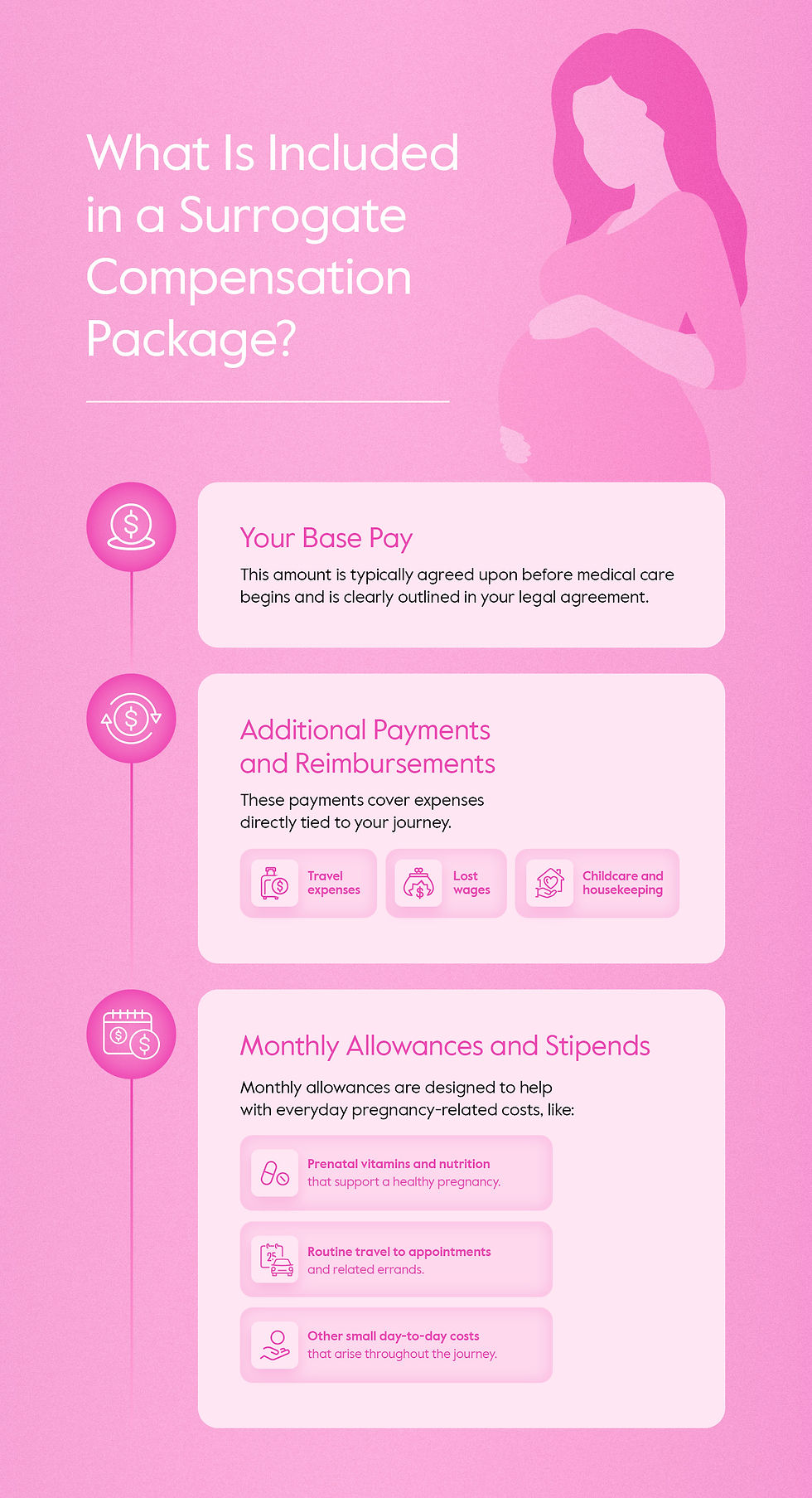
This amount is typically agreed upon before medical care begins and is clearly outlined in your legal agreement. It is separate from reimbursements, allowances, and other additional payments that may be available throughout the journey.
In many arrangements, you’ll start receiving your base pay after pregnancy is confirmed, and these payments will continue in regular monthly installments until the baby's arrival.
The exact amount of base pay can vary depending on factors like location, whether you have experience as a surrogate, and the specifics of the arrangement. Experienced surrogates who have completed a previous journey often receive higher compensation than first-time surrogates.
Additional Payments and Reimbursements
These payments cover expenses directly tied to your journey. They prevent you from paying out of pocket for necessary journey-related costs.
Common reimbursements in a surrogate compensation package include:
Travel expenses: Transportation, lodging, and meals related to medical appointments are typically covered. Some agencies also cover your travel companion’s lost wages when they accompany you to appointments.
Childcare and housekeeping: Support for childcare or household help may be included when medical recommendations make it necessary.
Lost wages: If appointments or bed rest affect your ability to work, reimbursement may be available.
Certain milestone events may also trigger additional payments. These payments apply to specific events that require extra time, effort, or recovery. Examples can include embryo transfers, carrying multiples, or delivery-related medical care.
Monthly Allowances and Stipends
Monthly allowances are designed to help with everyday pregnancy-related costs, like:
Prenatal vitamins and nutrition that support a healthy pregnancy.
Routine travel to appointments and related errands.
Other small day-to-day costs that arise throughout the journey.
One advantage of this type of payment is flexibility. Rather than tracking every minor purchase or submitting receipts for routine expenses, you can use the allowance to address ongoing needs as they arise.
How Is Surrogate Compensation Paid Out?
While every arrangement is unique, most compensation packages follow a structured payment schedule tied to specific milestones throughout the journey.
1. Before the Pregnancy
The surrogacy journey requires some of your time and energy before pregnancy begins. Here's what that typically looks like:
Screening advance: After you complete your screening and have been matched with intended parents, you may receive an early advance. This is often the first payment in the journey, before any medical steps begin.
Contract signing: Once all parties have reviewed and signed the Gestational Carrier Agreement, you may receive a contract-signing payment. This payment recognizes the completion of an important legal step and the formal start of your journey.
Medical screening: When you travel to the fertility clinic for your medical screening, a further payment typically follows. This recognizes the travel, time, and testing the appointment involves.
Medical clearance: After your medical screening, the clinic confirms whether you're cleared to move forward. A payment often follows clearance, at the point fertility medications begin — these require careful scheduling and regular monitoring appointments.
Embryo transfer day: The transfer is a significant medical process that often involves travel, preparation, and recovery time. Transfer-related compensation recognizes your commitment to this important step.
Monthly allowances and reimbursements: During this stage, you may also begin receiving monthly allowances and reimbursement payments for approved travel or related expenses.
2. During the Pregnancy
The largest portion of surrogate compensation frequently begins once pregnancy is confirmed.
Rather than receiving a large lump sum, you may receive your base pay through regular monthly installments throughout the pregnancy. This approach gives you predictable, consistent support so you can plan accordingly.
Additional payments might also occur. For example, you may receive reimbursement for travel to specialist appointments, compensation for physician-ordered bed rest, or support for childcare expenses associated with medical visits.
Your compensation agreement could also include separate allowances. These payments address ongoing, surrogacy-related expenses that may not fit neatly into other reimbursement categories, such as an allowance for maternity clothing, or a stipend toward housekeeping or meal delivery.
3. After Delivery
Following delivery, you'll typically receive the last portion of your base pay, along with a period of continued support while you recover. Additional payments may also be available depending on the circumstances of the delivery and recovery process, including:
Postpartum lost wages: Many agreements cover several weeks of lost wages post-delivery so you have time to recover, paid in addition to your base pay.
Support person lost wages: Your partner or support person may also receive lost wages for a short period around your delivery.
Post-pregnancy flexible payment: Some agreements include a discretionary payment after delivery that you can use however you choose, along with support toward family meals during recovery.
Continued milk expression: If you and the intended parents both agree to it, compensation may continue for a period of postpartum pumping.
What Happens in Unexpected Situations?
Medical outcomes can vary. Here's how compensation typically works in different situations.
Embryo Transfer Is Unsuccessful
Embryo transfer takes place after you've already completed screenings, attended appointments, followed medication protocols, and undergone a medical treatment.
Many compensation structures include a transfer fee or similar milestone payment that you receive regardless of the outcome of the transfer. Most agreements also include reimbursements for travel, childcare, lost wages, and other approved transfer-related expenses.
Multiple Transfers Are Needed
Sometimes it takes more than one embryo transfer before you become pregnant. Each transfer cycle requires additional appointments, medications, monitoring, and scheduling commitments. Because of this, compensation packages often include provisions for multiple transfer attempts.
Your legal agreement should specify how many transfer attempts are covered and what compensation applies to each.
Pregnancy Loss Occurs
Pregnancy loss has a substantial emotional impact on everyone involved. Most compensation agreements address this scenario in advance to provide clarity about financial arrangements.
While the specific terms vary, you typically receive compensation for the time you've already devoted to the pregnancy. Your legal agreement may also provide additional compensation related to recovery, medical care, or future transfer attempts.
How Are Your Payments Secured and Protected?
Compensation amounts and payment schedules are important, but understanding how your payments are protected matters just as much.
Legal Contract
The contract outlines the rights, responsibilities, and expectations of everyone involved. It serves as the foundation for the financial relationship between you and the intended parents.
The agreement details your specific compensation information, including:
Base pay amounts
Payment timelines
Monthly allowances
Reimbursement policies
Additional milestone payments
Compensation for specific medical circumstances
Recovery-related support
Having these details documented in a legally binding agreement helps reduce misunderstandings and provides a clear framework for the financial aspects of the journey.
Escrow Accounts
An escrow account is a dedicated account held separately from the intended parents’ own finances. Instead of the intended parents paying you directly throughout the journey, they place funds into this account in advance. Depending on the agency, this account may be managed by an escrow company or handled in-house. Either way, funds are managed professionally and released to you according to the payment schedule in your legal agreement.
This setup works in your favor in a few important ways:
Funds are secured early: You can confirm the money is there before any major medical steps begin.
Payments are transparent and trackable: Every payment and reimbursement is managed through a clear, documented process.
No awkward money conversations: Because payments are handled through a dedicated escrow process, you and the intended parents can focus on the journey rather than the finances.
Additional Financial Protections
These protections vary depending on the surrogacy agency you work with, insurance arrangements, and individual agreement. Examples may include protections for lost wages, your support partner's lost wages, life insurance, disability insurance, or extended recovery support.
Some agencies also provide written commitments that you're not responsible for any approved journey-related expenses. These provisions can help reduce financial uncertainty and allow you to prioritize your health and well-being.
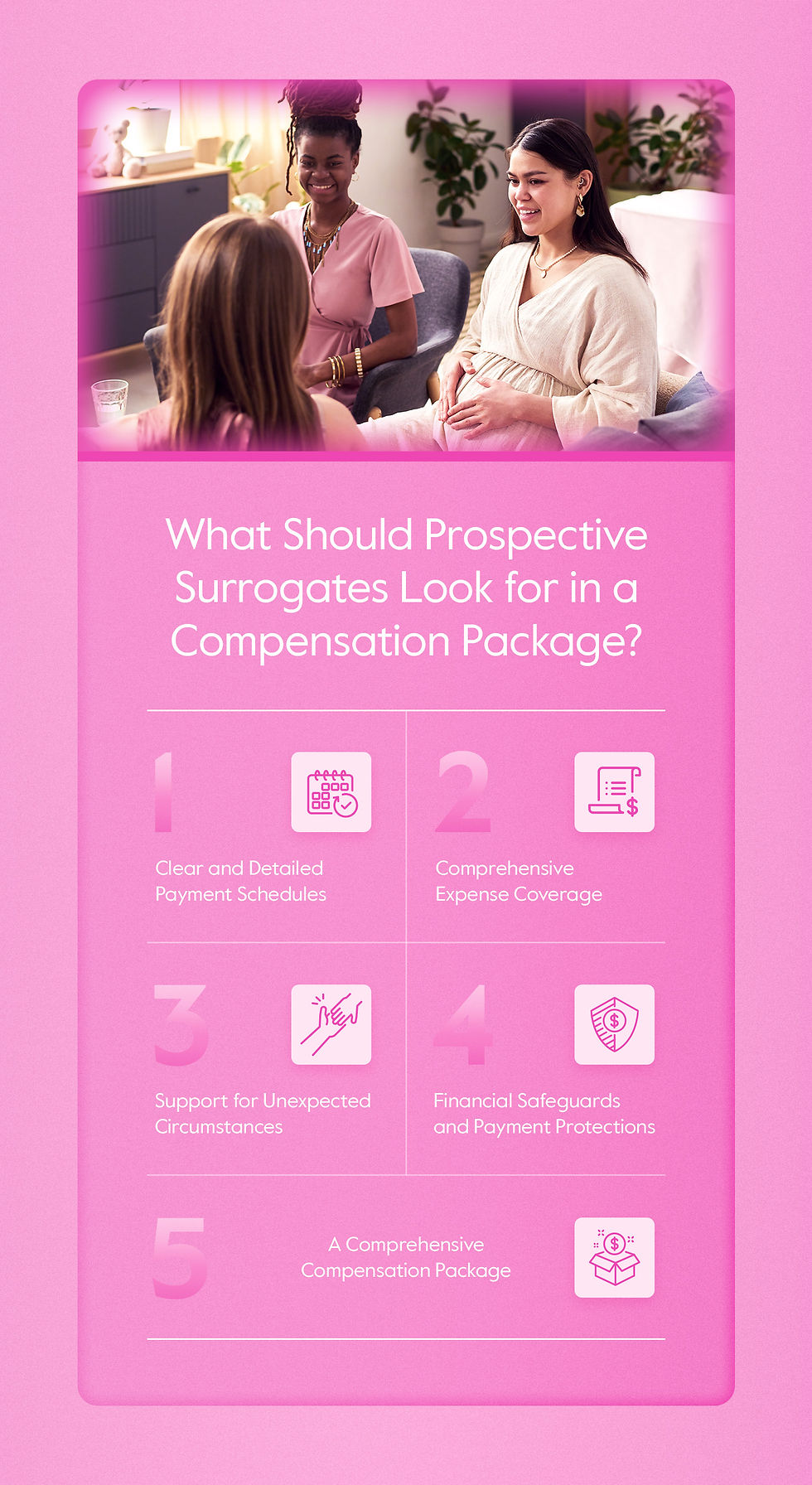
What Should Prospective Surrogates Look for in a Compensation Package?
Taking time to understand how compensation is structured can help you make more informed decisions and avoid surprises later in the process.
Clear and Detailed Payment Schedules
A strong surrogate payment schedule clearly details the types of compensation you'll receive, when it will occur, and which milestones trigger it. You should understand the timing of payments from the earliest stages of the journey through postpartum recovery.
Comprehensive Expense Coverage
A well-structured compensation package will identify which costs are reimbursable and explain the process for receiving reimbursement. Reviewing provisions carefully can help you understand what financial responsibilities you may or may not have during the journey.
Support for Unexpected Circumstances
As discussed above, unforeseen events can happen during a surrogacy pregnancy, and legal agreements should address these situations. While agreements often cover costs related to multiple embryo transfers and pregnancy loss, there are other situations worth considering.
To make sure you’ll have financial support if the unexpected occurs, review a compensation package for circumstances like:
Pregnancy complications
Physician-ordered bed rest
Cesarean delivery
Extended recovery periods
Financial Safeguards and Payment Protections
Understanding how the agency manages compensation funds and whether it uses escrow accounts is important. It's also crucial to know the safeguards available to ensure payments are made in accordance with the agreement.
Questions about legal protections, insurance coverage, reimbursement procedures, and financial guarantees are all reasonable considerations when evaluating a surrogacy agency’s compensation package. For example, ensure the agency requires fully funded escrow accounts up front, and look for those who guarantee you’ll get paid, even if the intended parents’ circumstances change.
A Comprehensive Compensation Package
Surrogacy is a process that involves preparation, medical treatment, pregnancy, delivery, and recovery.
The strongest compensation structures acknowledge the full scope of your commitment by providing support throughout every stage of the journey. Rather than focusing on a single payment amount, they create a framework that provides financial support from beginning to end.
Frequently Asked Questions
Get your pressing questions on surrogacy compensation answered.
How is surrogate compensation taxed?
Tax liability for your compensation can vary by location and your individual circumstances. It's best to consult with your tax professional about your situation to understand any potential impact on your finances.
Can I negotiate my compensation?
In many cases, yes. You'll work with your own attorney — separate from the one your intended parents use — to draft your legal agreement. You can discuss your preferences and negotiate your compensation package as part of this process. It's also worth noting that your intended parents pay for your legal consultation, so it's not an out-of-pocket expense for you.
How does carrying multiples affect compensation?
Carrying multiples requires more medical monitoring and can affect your physical comfort and recovery, which your compensation structure should reflect. Your legal agreement will typically address this scenario and detail what you can expect financially.
What does "qualified compensation" mean?
Qualified compensation refers to the compensation described in your legal agreement that you're entitled to receive based on the steps you've completed. This term includes contractual payments like base pay, milestone payments, reimbursements, and allowances.
How does my health insurance coverage affect my potential compensation?
Some health insurance policies cover surrogacy costs. Your agency will review any existing health insurance you have to confirm whether coverage is available. If so, the intended parents do not need to purchase a separate policy for you, which may be reflected in your compensation package.
Making Informed Compensation Decisions
Surrogate compensation involves multiple components — base pay, milestone payments, allowances, and reimbursements. Understanding how these elements work together, when payments occur, and what protections exist helps you make informed decisions about your journey.
If you're considering surrogacy, take time to review compensation packages carefully, ask detailed questions, and consult with an attorney during the contract process. The right compensation structure should support you financially from the earliest stages through postpartum recovery.
Working with an experienced surrogacy agency can help you navigate these details and ensure your compensation structure is fair, comprehensive, clearly documented, and properly protected.
Ready to partner with an agency who truly takes care of their surrogates? For over 30 years, Circle Surrogacy has supported surrogates through every step of the journey, from matching them with compatible intended parents to guaranteeing they get paid on time and in full, no matter what. Apply to become a surrogate, and start a conversation with our team!