5 Things To Consider When Choosing a Surrogacy Agency
Updated: Sep 18
Starting your surrogacy journey often comes with a mix of emotions and key decisions to make. For many intended parents, one of the most important parts is knowing how to choose a surrogacy agency you can trust. There are financial commitments to consider and legal processes to understand as you walk this path.
You may be wondering what questions to ask, what details matter most, and how to compare agencies in a meaningful way. This comprehensive guide from Circle Surrogacy details the process of choosing an agency, so you have a clear set of criteria to help you make an informed decision.
Key Takeaways
Look beyond general claims and focus on how many surrogacy journeys an agency has managed and how consistently it shares that information.
Some agencies provide complete support across medical, legal, and emotional aspects, while others focus on only part of the process.
How an agency screens and matches surrogates can influence timelines, compatibility, and the overall experience.
Understanding how agencies define and share their success rates helps you compare options.
The way an agency plans for and responds to unexpected situations is a sign of the support you can expect throughout.
What Does the Surrogacy Process Look Like From Start to Finish?
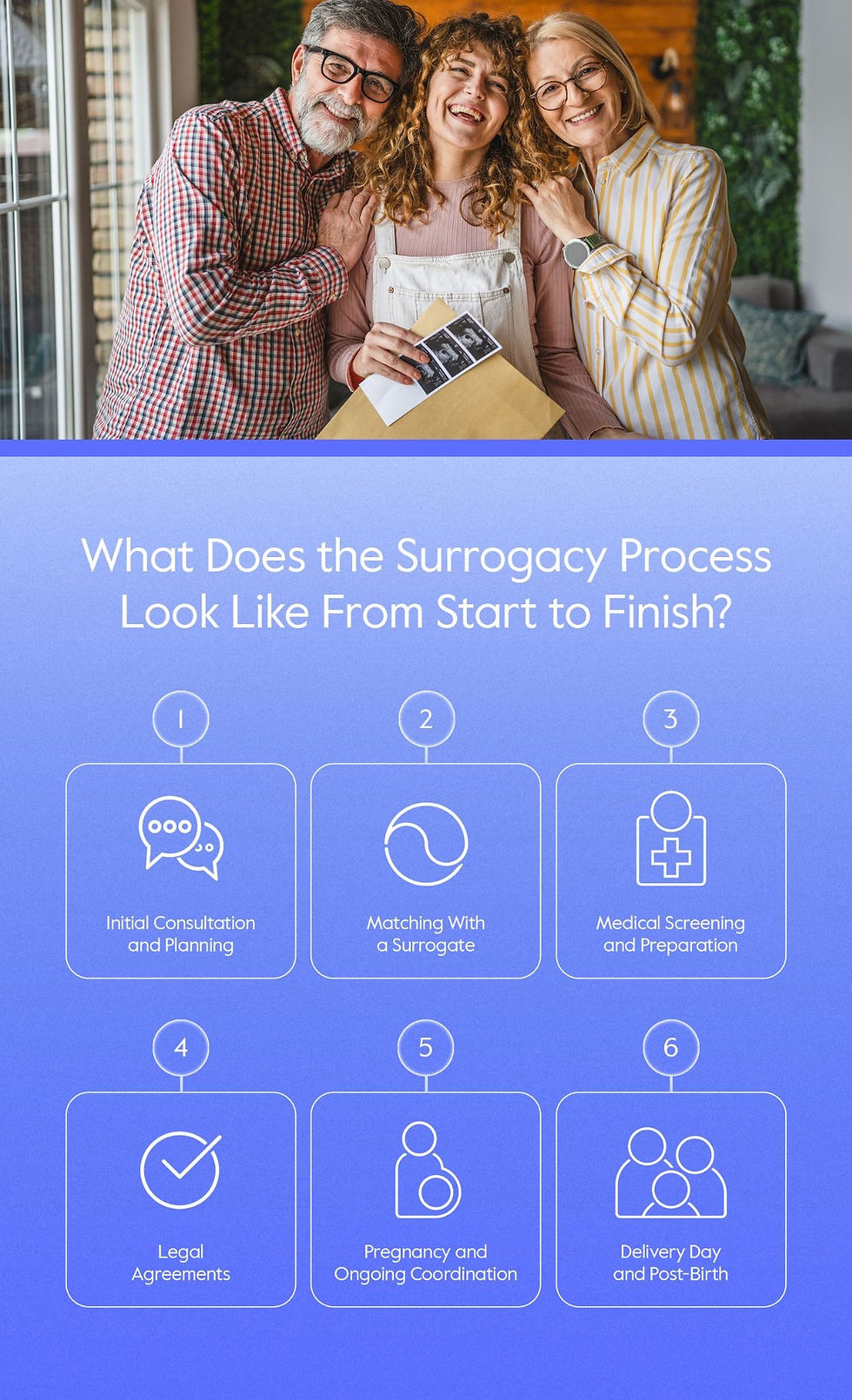
It's natural for intended parents to ask questions to ensure they understand what the surrogacy journey typically looks like. This context makes it easier to see where an agency helps and why certain types of support matter more than others. While every journey is different, most follow a similar process of six steps:
1. Initial Consultation and Planning
As you research surrogacy agencies, you'll typically start with a consultation to discuss your goals, timeline, and any medical or legal considerations. This stage often includes a review of the process, estimated costs, and what comes next.
For example, you may already be working with a fertility clinic or just beginning to explore your options. The agency's role during this step is often to help you understand your choices and design a path forward that meets your needs.
2. Matching With a Surrogate
Once you decide which agency you want to work with, coordinators begin identifying a potential surrogate match for you. This step can vary in length depending on availability, preferences, and screening requirements.
In practice, the surrogate matching process usually involves reviewing profiles, discussing expectations, and ensuring alignment between you and your gestational surrogate. With gestational surrogacy, your surrogate carries an embryo created through IVF using your (or donor) sperm and egg, so she shares no DNA with the baby.
3. Medical Screening and Preparation
After matching, your surrogate typically completes medical evaluations to confirm she is mentally and physically prepared for the journey ahead. The agency works with your fertility clinic to arrange necessary physical exams, lab work, and consultations.
4. Legal Agreements
Before any medical treatments take place, you and your surrogate will establish the legal contract that protects both of you. This agreement outlines responsibilities, expectations, and legal rights for everyone involved. This step is essential for ensuring alignment and following applicable laws. The U.S. handles surrogacy regulation on a state-by-state basis, making experienced legal counsel essential.
Some agencies have in-house legal teams to draft the contract and help you navigate your state’s laws. Others outsource legal services to third parties. Either approach can work well. However, having access to in-house attorneys can help streamline the legal aspect of your surrogacy journey.
5. Pregnancy and Ongoing Coordination
Once your surrogate is pregnant, the focus shifts to support throughout the pregnancy. Agencies may help manage communication, track milestones, and provide logistical and emotional assistance.
For example, some agencies maintain regular check-ins to ensure you and your surrogate stay informed and have access to ongoing support, or coordinate with the delivery hospital to ensure everyone is prepared for the big day.
6. Delivery Day and Post-Birth
The final stage centers on your baby's arrival and the legal and logistical steps that follow birth. This process can include documentation, travel coordination, and facilitating communication to create a smooth journey for everyone.
What Does a Surrogacy Agency Actually Do?
In a typical surrogacy journey, there are multiple professionals involved, including doctors, attorneys, social workers, and support staff. Most agencies act as coordinators — instead of navigating the path on your own, you can work with an agency to bring structure and continuity to the process.
This kind of oversight from an agency helps ensure that everyone is working together. For example, if a medical appointment is delayed, this may affect legal timelines or travel arrangements. An agency helps manage these changes so there is less potential for delay. This role is often one of the most important aspects of what an agency provides.
Core agency responsibilities commonly include:
Identifying and introducing potential surrogate candidates based on your criteria.
Working with fertility clinics to coordinate appointments, track progress, and manage timelines.
Connecting you and your surrogate with qualified legal professionals and confirming agreements are complete before medical steps begin.
Centralizing communication to keep everyone informed and aligned.
How to Choose a Surrogacy Agency: 5 Key Things to Consider
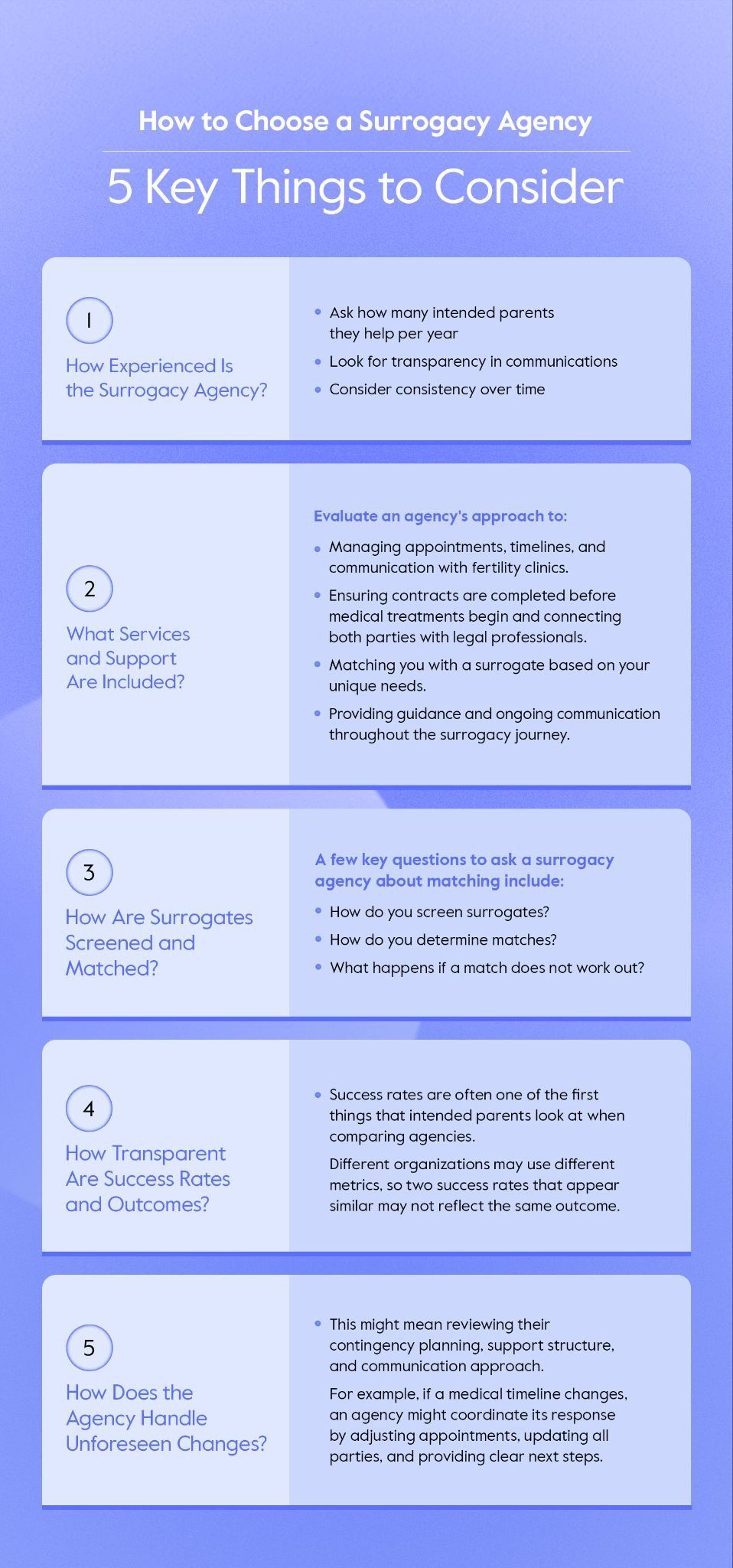
Choosing a surrogacy agency involves looking beyond program descriptions to understand how each agency operates and what factors differentiate them from each other.
1. How Experienced Is the Surrogacy Agency?
Experience shapes how an agency handles the journey, so it's worth researching how many intended parents an agency has helped and how consistently it has supported different types of journeys.
Here are three ways to evaluate and compare multiple agencies:
Ask how many intended parents they help per year: Understanding how many surrogacy journeys an agency supports each year can provide more insight than simply knowing how long the company has existed.
Look for transparency in communications: Agencies that openly share information make it easier to assess their capabilities and support level.
Consider consistency over time: A steady track record over many years or decades can indicate stability and expertise.
2. What Services and Support Are Included?
Understanding what to look for in surrogacy journey support services can help you compare agencies effectively. However, not all agencies provide the same level of support, even if their offerings appear similar at first glance. Some offer full-service support, while others may focus on specific parts of the journey.
Evaluate an agency's approach to:
Coordinating appointments, timelines, and communication with fertility clinics.
Ensuring contracts are completed before medical treatments begin and connecting both parties with legal professionals.
Matching you with a surrogate based on your preferences.
Providing guidance and ongoing communication throughout the surrogacy journey.
3. How Are Surrogates Screened and Matched?
The screening and matching process is one of the most important parts of a surrogacy journey. While most agencies describe their screening as thorough, the actual steps involved and the decision-making processes they use can vary.
In general, surrogate screening is designed to ensure candidates are medically, legally, and emotionally prepared for the process. Matching focuses on aligning expectations, preferences, and communication styles between you and your surrogate.
Although each agency may go about it differently, screening often involves several layers. These steps are designed to help reduce risks and support informed consent for everyone involved:
A review of health history, prior pregnancies, and overall physical readiness for surrogacy.
Psychological evaluations to ensure the surrogate understands the process and is emotionally prepared.
A review of background and home life.
Considerations of factors like daily routines, support systems, and commitments that may affect the journey.
Matching typically involves aligning preferences and expectations on both sides. This process may include reviewing detailed profiles, participating in introductory conversations, and confirming that both parties want to move forward.
For example, you may have preferences about communication frequency, how involved you can be during the pregnancy, or logistical considerations like location. At the same time, your surrogate may have her own expectations about the relationship.
A few key questions to ask a surrogacy agency about matching include:
How do you screen surrogates? This helps clarify how thorough the screening process is and what criteria the agency uses.
How do you determine matches? It's important to know whether matching is primarily logistical or also considers personal compatibility.
What happens if a match does not work out? Knowing how the agency handles rematching helps you understand the process if circumstances change.
Be sure to ask if the agency charges a fee for rematches. Some agencies include unlimited surrogate rematching in their program cost, while others increase costs to work with a new surrogate.
4. How Transparent Are Success Rates and Outcomes?
Success rates are often one of the first things that intended parents look at when comparing agencies. However, these numbers can be challenging to interpret without details on how the agency calculates and shares them. Different organizations may use different metrics, so two success rates that appear similar may not reflect the same outcome.
Agencies may report a range of success rates like:
The percentage of successful surrogate matches that progress to the next stage.
The percentage of surrogates who become pregnant after embryo transfer.
The percentage of intended parents who bring home a baby.
Each of these metrics reflects a different stage of the process. Without clarification, it's easy to assume they mean the same thing. Understanding the context enables comparisons and more informed decision-making.
To verify the success rates of surrogacy agencies, take a closer look at the underlying data:
Ask how the agency defines the metric — for example, does pregnancy rate reflect a single attempt or multiple embryo transfers over time?
Check whether the agency uses the same definitions across all its data to avoid inconsistencies.
Consider whether the data includes factors like medical complexity, age, or other variables.
5. How Does the Agency Handle Unforeseen Changes?
Even with careful planning, surrogacy journeys can change, and how an agency responds in the most challenging moments matters as much as how it plans ahead. Some situations are unpredictable, which makes preparation and responsiveness especially important. Situations where an agency's expertise matters most include:
Adjustments to treatment plans, delayed appointments, or unexpected health circumstances.
Situations where a match may need to be reconsidered.
Changes in surrogacy law that could affect agreements.
To compare surrogacy agency support for unexpected journey complications, it's important to examine how agencies approach these challenges. This might mean reviewing their contingency planning, support structure, and communication approach. For example, if a medical timeline changes, an agency might respond by collaborating with medical professionals on appointment changes, updating all parties, and providing clear next steps.
What Questions Should You Ask a Surrogacy Agency Before Choosing One?
Asking questions can help you understand how an agency operates in real situations and whether their approach aligns with your priorities.
What do your surrogacy programs include? This helps clarify whether the agency provides full coordination or focuses on specific parts of the journey.
How do you define and report success rates? This ensures you interpret data accurately and consistently.
What happens if challenges arise? Knowing how they handle changing situations can help set realistic expectations.
How do you manage communications? This can indicate how accessible and responsive the agency will be.
How to Watch for Red Flags and Compare Agencies Effectively
There are a few indicators that may suggest the need for closer evaluation. It's best to pause and dig deeper if you notice any of the following:
Lack of transparency: Limited or unclear information about services, timelines, or outcomes can make comparisons more challenging.
Vague success metrics: Broad statements without clear definitions could lead to unrealistic expectations.
Limited support structure: When coordination is unclear, it can create friction between all parties.
Inconsistent communication: Delayed or unclear responses may indicate potential issues with ongoing support.
Once you've ruled out any red flags, compare your remaining options using a consistent set of criteria rather than general impressions:
Create a comparison checklist across key factors like services, support, experience, and transparency to help organize the information you gather.
Ask every agency the same questions, so it's easier to compare responses.
Evaluate responsiveness in early interactions as an indicator of how the agency might communicate throughout the surrogacy journey.
Speak with references or join support communities — talking with others about their experiences with an agency provides details that an agency's own materials won't cover.
Choose the Right Agency for Your Surrogacy Journey
Selecting a surrogacy agency is a personal decision with many variables to consider. It's normal to wonder about how to evaluate your options and what factors matter most.
Understanding how the surrogacy process works, asking good questions, and focusing on areas like experience, support, transparency, and preparation can help you make the right choice for your family.
At Circle Surrogacy, we understand the importance of choosing a surrogacy agency who genuinely supports you, because many of us have been in your shoes. In fact, nearly half of our team are parents who have grown their family through surrogacy, adoption, IVF, or egg donation, or are experienced surrogates or donors. We’re happy to answer any of your questions about our program or surrogacy in general. Connect with Circle today to learn more!