

How to Find a Surrogate: A Short Guide
Updated: 3 days ago

The decision to grow your family through surrogacy is a personal one that comes with many questions about the process and where to start.
Finding a surrogate is one of the most significant steps in the journey. This guide from Circle Surrogacy explores how to find a surrogate, how the matching process works, and what you can expect along the way.
Most intended parents find a surrogate one of two ways: through an agency that screens and matches candidates for them, or independently, with someone they already know. Either path requires medical and psychological screening, independent legal counsel on both sides, and insurance in place before an embryo transfer.
Key Takeaways
Surrogacy follows a structured, multi-step process where planning, screening, matching, legal agreements, and medical care all play a role.
Intended parents may work with an agency or explore independent options to find a surrogate.
Agencies use detailed matching processes that involve reviewing profiles, aligning expectations, and confirming compatibility.
Legal, medical, and logistical steps protect everyone involved and help ensure the process stays on track.
Understanding the Basics of Surrogacy
There are two types of surrogacy — gestational and traditional. Understanding the difference helps you to plan for the right legal, medical, and matching approach.
What Is a Gestational Surrogate?
A gestational surrogate carries and delivers a baby for you, but she is not biologically related to the baby. Embryos are created through in vitro fertilization (IVF) using your egg and sperm, donor eggs, donor sperm, or a combination. The embryo is then transferred to your surrogate's uterus, and she carries the baby.
How Does Gestational Surrogacy Differ From Traditional Surrogacy?
Traditional surrogacy involves a surrogate who shares DNA with the baby. This approach uses the surrogate's own egg for conception. The International Federation of Gynecology and Obstetrics (FIGO) discourages this option, as a shared genetic connection can lead to a more complex and challenging surrogacy journey.
As a result, gestational surrogacy is the more common path. Since the surrogate isn't genetically related to the baby, the legal framework is clearer, and the process is generally more straightforward.
Who Is Involved in the Surrogacy Journey?
A surrogacy journey brings together many individuals and professionals, each with a specific role:
Intended parents: Individuals or couples planning to grow their family through surrogacy.
Surrogate: The woman who carries and delivers the baby for the intended parents.
Fertility specialists: Medical professionals who help create and transfer embryos.
Legal professionals: Attorneys who prepare agreements and ensure legal clarity.
Support professionals: Coordinators, counselors, and administrative teams who help manage the process.
Two Paths to Finding a Surrogate

There are two main approaches to finding your surrogate, each with its own considerations.
Working With an Agency
When you work with an agency, it handles the surrogacy matching process, from screening potential surrogates to confirming compatibility.
There are many advantages of a surrogacy agency, including:
Experience in screening surrogates: Agencies typically have rigorous surrogate requirements to help ensure readiness for the commitment. Screening involves medical evaluations, psychological assessments, background checks, and verification of their pregnancy history.
Thorough matching process for better alignment: The matching process for surrogates and intended parents typically includes reviewing detailed profiles, having initial conversations, and sometimes meeting in person or via video call before making a final decision. The agency handles these events and allows both parties to communicate openly about their wants and needs.
Ongoing support: Agencies may also coordinate all the logistics throughout the pregnancy, including scheduling medical appointments, handling payments and escrow services, and coordinating with your fertility clinic. This level of support can take real logistical weight off you during the pregnancy.
Most full-service surrogacy agencies also provide mental health support throughout the journey to help you navigate the emotional aspect. Some agencies have mental health professionals in-house, which means support is integrated into every step.
Finding a Surrogate Independently
Some intended parents choose to pursue surrogacy with someone they already know, like a friend or family member. This path can feel more personal and offers the advantage of familiarity and an established relationship with your surrogate.
However, independent surrogacy still requires the same legal agreements and medical framework as agency-assisted surrogacy. You'll need independent legal representation for both parties, thorough medical screening, psychological evaluations, and proper insurance coverage. These steps provide legal protection and define each party's rights and responsibilities.
If you wish to pursue surrogacy with a friend or family member but still want professionals managing the process, many agencies offer programs that allow you to partner with someone you already know while receiving full agency support.
What Costs Are Involved in Surrogacy?
Surrogacy involves several types of costs, which can vary depending on the specific journey you choose. Since each experience is different, it's best to understand the different costs that a journey might include so you can make more informed decisions about the right program for you.
Surrogacy costs commonly include the following:
Surrogate-related expenses, like compensation and pregnancy-related costs.
Medical expenses, like fertility treatments and healthcare.
Legal fees, like development of contracts and legal documentation.
Administrative costs, like coordination and support services.
If you decide to work with an agency, consider how transparent they are about costs. Most reputable surrogacy agencies provide detailed cost breakdowns that clearly outline what’s included in their program and what you’ll pay separately. This transparency helps you plan financially for your journey and avoid surprises.
How Does the Surrogacy Process Work?
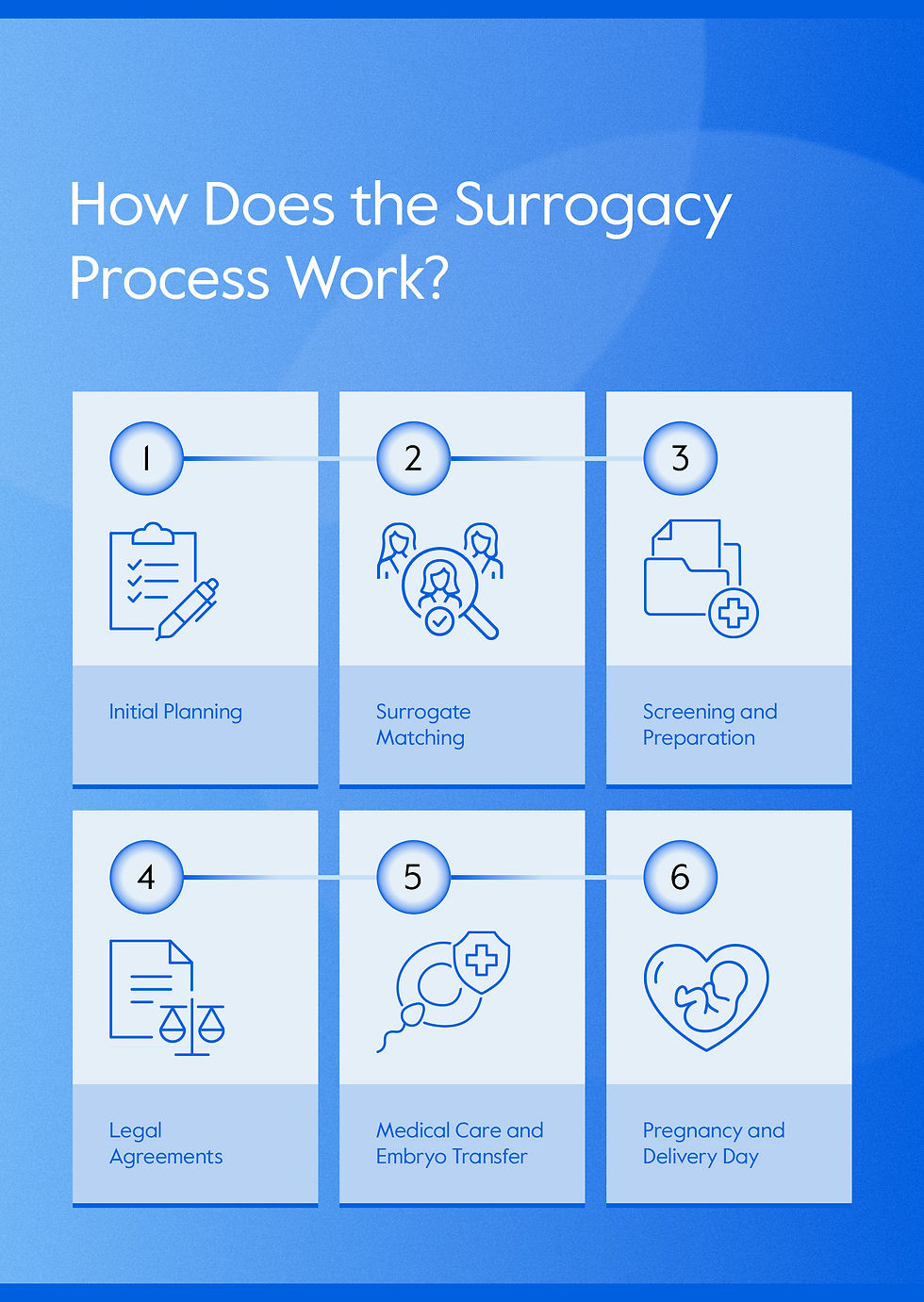
As you begin exploring surrogacy to grow your family, understanding how the surrogacy process works from start to finish is helpful. The journey involves several steps, with each stage building on the one before.
1. Initial Planning
This step is where you can learn about surrogacy, explore options, and decide how you want to move forward. Some intended parents may begin by researching agencies, while others speak with fertility specialists first. Many intended parents also use this stage to begin planning for surrogacy costs, investigating financing or insurance possibilities, and building their support network.
2. Surrogate Matching
The surrogacy matching process is one of the most important steps.
This stage is where you can explore compatibility in greater detail. You'll review different profiles, identify potential matches, meet each other, and talk about your expectations. For example, you might discuss important topics like communication preferences and how actively you want to participate in care appointments or other pregnancy milestones.
Your fertility clinic will also review the surrogate's medical history to confirm compatibility with treatment plans, and then you can move forward to the next stages.
3. Screening and Preparation
If you're searching for a surrogate on your own, screening takes place after you've chosen your surrogate. This step includes medical evaluations, psychological assessments, background checks, and pregnancy history verification. If you're working with an agency, your potential surrogate will have already completed comprehensive screening before the surrogacy matching step.
4. Legal Agreements
You and your surrogate will meet with your attorneys for legal advice. Having separate counsel ensures you each receive specific guidance and protections. These professionals help you reach an agreement and create the documents that clearly outline everyone's expectations, rights, and responsibilities. For example, your agreement will likely detail financial considerations and payment schedules to keep everyone aligned.
5. Medical Care and Embryo Transfer
During this stage, your surrogate will begin taking fertility treatments. These hormone medications prepare her body for embryo transfer and support early pregnancy. Your fertility clinic then oversees embryo transfer after your surrogate completes the medication protocols.
6. Pregnancy and Delivery Day
Once pregnancy is established, your surrogate receives ongoing prenatal care, including regular check-ups and ultrasounds. Many intended parents attend appointments with their surrogate and stay connected throughout the pregnancy with updates and communication.
As the due date approaches, you and your surrogate can work together on a birth plan. This includes discussing who will be present on delivery day, hospital arrangements, and preferences for the immediate moments after birth.
After delivery, you'll finalize any remaining legal requirements and welcome your baby home.
What to Look for in a Surrogate
Finding a strong match often includes ensuring alignment between you and your surrogate. Taking time to clarify details and preferences early can help create a good relationship.
Medical, Physical, and Lifestyle Considerations
Surrogates must meet specific medical, physical, and lifestyle requirements. These guidelines exist to protect both the surrogate and the baby throughout the pregnancy.
A successful pregnancy history is essential. Surrogates are generally required to have given birth to at least one baby previously, with no major complications. This demonstrates that they can carry a baby to term and helps medical professionals develop surrogate-specific care plans.
Health requirements include maintaining a healthy body mass index (BMI) and being a non-smoker living in a smoke-free home. Surrogates also need to pass comprehensive medical screenings and psychological evaluations.
Lifestyle considerations matter as well. Surrogates should live in a stable environment, have reliable transportation to attend medical appointments, and be willing to follow medical protocols throughout the pregnancy.
Key Personal Qualities and Characteristics
Aside from meeting the requirements above, certain personality traits can be valuable in building a strong connection between you and your surrogate, including:
Responsibility: Your surrogate will need to attend regular medical appointments, follow medication schedules, maintain a healthy lifestyle throughout the pregnancy, and communicate openly about any concerns or changes in health.
Good communication skills: Surrogacy is a collaborative process that requires honest, respectful conversations between you and your surrogate. You'll want someone who can express their needs and boundaries while also being receptive to your input and feedback. The ability to navigate potentially sensitive topics with maturity and consideration benefits everyone.
Supportive home environment: Surrogacy is a physical and emotional experience, and having a support network can make a meaningful difference. Whether a partner, family members, or close friends, surrogates often find it helpful to have people around them to provide practical and emotional support.
Other qualities to consider include a genuine desire to help others build their families and a clear understanding of the surrogacy process with realistic expectations.
What Are the Key Legal and Ethical Considerations to Know?
Legal and ethical considerations are important for any surrogacy journey. These aspects are designed to protect everyone involved and ensure clarity throughout.
Surrogacy Law and Parental Rights Options
Working with an attorney who specializes in surrogacy law early in the process helps you understand the requirements and plan accordingly. Important aspects to consider include:
How you'll establish your parental rights: Some states allow pre-birth orders, which means you can be legally recognized as the baby's parents before delivery. Other states require post-birth adoption processes, which can add time and steps after delivery day.
Which laws take precedence based on geography: If you and your surrogate live in different states, you'll need to understand which state's laws apply. Interstate surrogacy can introduce additional legal complexity, so working with attorneys experienced in multi-state cases is valuable.
What additional insurance you may need for your surrogate: Your surrogate's existing healthcare insurance may not cover surrogacy-related care, which means you may need to secure additional policies. Your attorney can help you understand coverage gaps and requirements. Additionally, some agencies employ in-house insurance specialists to help with this step.
Ethical Principles in Surrogacy
Ethical considerations create a foundation of respect and transparency throughout the journey:
Informed consent: Surrogates should fully understand the medical care, potential risks, time commitment, and emotional aspects of the journey. This includes access to independent counseling and time to ask questions.
Medical autonomy: While the surrogacy agreement outlines general expectations, your surrogate maintains the right to make informed medical decisions with her healthcare team.
Psychological support: Access to counseling helps both parties navigate the emotional aspects of the surrogacy journey and maintain open communication.
What Does Communication Look Like During the Surrogacy Journey?
Communication is an ongoing part of the surrogacy process. While every match is different, most journeys involve regular updates and check-ins.
The frequency and style of communication often depend on the preferences you and your surrogate agree upon during the matching stage. This might involve:
Sharing information about care appointments and progress.
Staying in touch throughout the pregnancy.
Coordinating details around the birth and delivery day.
Frequently Asked Questions
Get your pressing questions on finding a surrogate answered.
Can a friend or family member be my surrogate?
Yes, you can choose someone you already know. In these cases, the same medical, legal, and psychological steps still apply.
How long does the surrogacy journey typically take?
Timelines vary by agency and by journey. Most surrogacy journeys take 25-30 months from initial planning to birth. Factors like legal requirements, medical preparation, and time for your surrogate to become pregnant can all influence the timeline.
Is surrogacy legal everywhere?
No. Surrogacy is restricted or prohibited in many countries, which is why intended parents from more than 70 countries pursue surrogacy in the United States. Laws also vary by state. It is important to review the legal requirements based on where you and your surrogate are located.
Start Your Surrogacy Journey With Clarity
While every surrogacy journey is different, understanding each phase can help you make informed decisions as you build your family. Taking time to research your options, understand the legal landscape in your specific state, and clarify your expectations sets a strong foundation for success.
At Circle Surrogacy, we've spent more than 30 years on this with 99.2% of our intended parents welcoming a baby home. We manage your entire surrogacy journey, from thorough surrogate screening and matching to delivery day and beyond. Through our proprietary MatchMade™ process, we match you with a fully vetted surrogate whose preferences and expectations align with yours, including views on sensitive medical decisions. This alignment helps build a strong, collaborative partnership from the start.
Ready to find a compatible surrogate and start your path to parenthood? Connect with Circle to take the first step.


